Ramesh Jaura

Journalism

rameshjauradmin

s17

Is There a Future for Peace and Disarmament?

As we commemorate the 80th anniversary of World War II, global tensions are escalating, including friction in the Baltic Sea, conflicts between Iran and Israel, unrest in Asia and Africa, and wars in Gaza and Ukraine.
s14

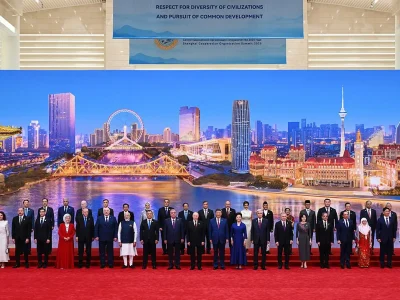
SCO Summit 2025: Eurasia’s Laboratory of Contradictions

For more than two decades, the Shanghai Cooperation Organisation (SCO) lingered in the margins of Western coverage—a Eurasian acronym that sounded bureaucratic, not dramatic. But in September 2025, as leaders gathered in Tianjin to mark the group's 25th anniversary
s11

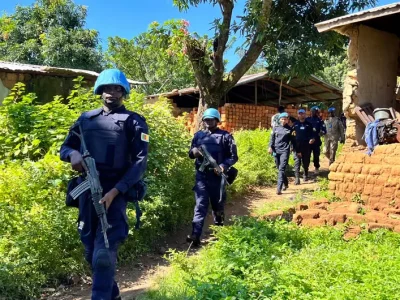
UN Peacekeeping in a Perilously Fragmented World

In an era characterized by volatile geopolitics, transnational threats, civil conflicts, and the deterioration of multilateral norms, the role of United Nations Peacekeeping has gained renewed significance and scrutiny. UN peacekeepers, commonly known as "Blue Helmets,"
s9

Peace and Disarmament Education: A Strategy to Prevent Dystopia

Fancy people around the world singing John Lennon's "Imagine" — of a world where there is "nothing to kill or die for" and "all the people living in peace…sharing all the world…as one"!
s8

The BRICS: A Twilight Saga in Trade Wars

Some economists pass their careers in front of computer screens scrutinising spreadsheets, complaining about interest rates, and disappearing gracefully into the beige landscape of wonkish foreign policy.Peter Navarro, a professor emeritus of economics and public policy
s7

At 80, the United Nations Faces a Moment of Reckoning — and Renewal

As the United Nations prepares to celebrate its 80th anniversary in 2025, the milestone presents an opportunity to reflect not only on past achievements but also on the future. It presents a pivotal opportunity to ask whether the UN, born from the ashes of World War II
s5

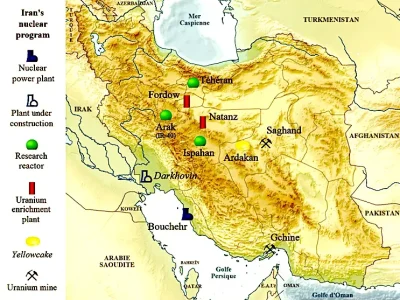
A New Nuclear Arms Race Has Begun — and the World Is Not Ready

For over three decades, the world took cautious steps away from the brink of nuclear catastrophe. Warheads were dismantled, treaties were signed, and deterrence was managed through diplomacy. That era is now over.
s3

Bandung at 70: A Model for a World Falling Apart

“Things fall apart; the centre cannot hold; Mere anarchy is loosed upon the world, The blood-dimmed tide is loosed, and everywhere The ceremony of innocence is drowned; The best lack all conviction, while the worst Are full of passionate intensity.” —W.B. Yeats
s1

When the Centre No Longer Holds

As the Canadian prime minister concluded his speech at the World Economic Forum in Davos on 20 January 2026, the applause lingered, stretching just beyond the ordinary. Bold promises or grand unveilings did not spark it. Instead, he did something unusual:
3

No more Hiroshima. No more Nagasaki. No more war. No more hibakusha.

Eighty years ago, on 6 and 9 August 1945, the cities of Hiroshima and Nagasaki were obliterated by atomic bombs dropped by the United States—the only time nuclear weapons have been used in war. The blasts killed between 150,000 and 246,000 people, including an estimated 38,000 children